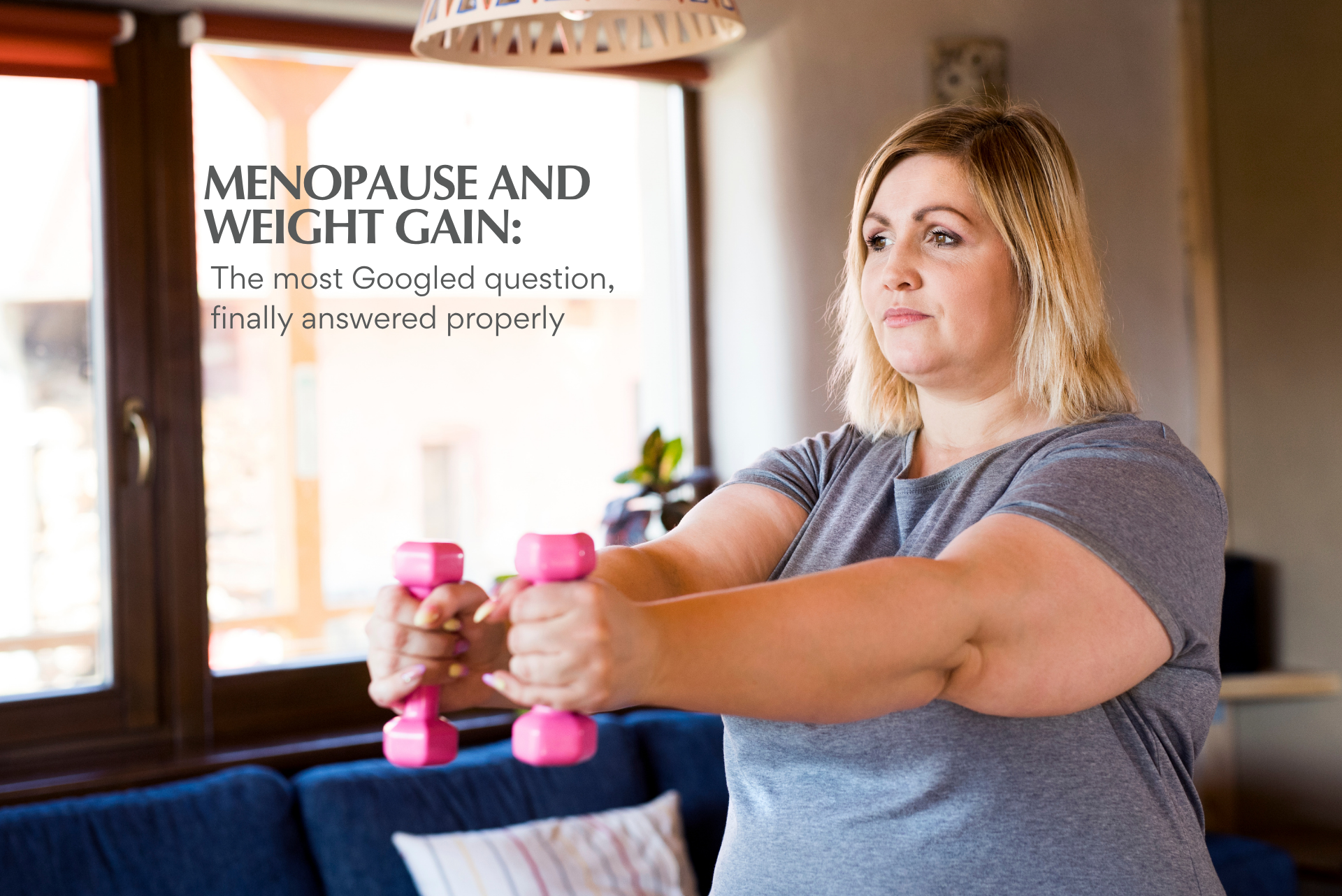
Menopause and weight gain: the most Googled question - finally answered properly
Every week in my clinic I sit across from women who have been Googling the same question at midnight, frustrated and exhausted: why am I gaining weight even though nothing has changed?
They are eating the same way they always have. They are exercising. Some are doing more than they ever have. And still - the weight is going on, particularly around the middle, and nothing is shifting it.
The answer to that question is not a better diet or a harder workout. It is understanding what perimenopause and menopause actually do to your body - and knowing that there are real options that match what your body actually needs right now.
That is what this blog is for.
The most Googled questions about menopause weight gain - answered
"Why am I gaining weight during menopause even though nothing has changed?"
Because the rules changed. Not your habits - your hormones.
During perimenopause and menopause, oestrogen levels fall. Oestrogen plays a direct role in where your body stores fat - and when it drops, fat that previously settled on your hips and thighs shifts to your abdomen. This happens at a hormonal level, independently of what you eat or how much you exercise.
At the same time, your body becomes less sensitive to insulin - the hormone that manages blood sugar. This state, called insulin resistance, means your body stores more of what you eat as fat, particularly visceral fat (fat that sits around your internal organs). Your hunger signals also become less reliable, so you may feel hungrier than usual despite eating the same amount.
Add to this a gradual loss of muscle mass - which speeds up during the menopause transition - and your metabolism is burning fewer calories at rest than it used to. Nothing in your lifestyle changed. Your biology did.
The average woman gains around 1.5kg per year during perimenopause - driven by hormonal changes, not lifestyle.
(Post Reproductive Health, 2025)
"Why is the weight all going to my belly?"
This is one of the most distressing changes women describe - and one of the most misunderstood.
Before menopause, oestrogen directs fat storage to the hips and thighs. As oestrogen falls during perimenopause and menopause, this pattern changes and fat redistributes to the abdomen instead. This is not something you can out-exercise or out-diet - it is a direct hormonal effect.
The fat that accumulates here is predominantly visceral fat - fat stored around your liver, intestines, and other internal organs. Unlike the fat you can pinch on your hips, visceral fat is metabolically active. It produces inflammatory compounds and directly raises your risk of heart disease, type 2 diabetes, high blood pressure, and certain cancers.
This is why menopause belly fat is not simply a cosmetic issue. It is a clinical one. And it deserves proper clinical attention - not just a new exercise programme.
"When does perimenopause start - and could I already be in it?"
This surprises many women: perimenopause can begin in the late 30s. In Australia, it typically starts around age 45 to 47 - but for some women, hormonal changes begin years earlier.
Perimenopause is the transition phase before your final period. It can last anywhere from 2 to 12 years, with the average being 4 to 6 years. During this time, oestrogen and progesterone levels fluctuate - sometimes dramatically - which is why symptoms can come and go rather than appearing all at once.
The signs many women don't connect to perimenopause or menopause:
- Waking through the night for no clear reason
- Anxiety, low mood, or sudden rage that feels out of character
- Weight going to the middle even though nothing has changed
- Brain fog - losing words, forgetting things you never used to forget
- Periods becoming heavier, irregular, or more frequent
- Joint pain and slower recovery after exercise
- Reduced tolerance for alcohol or caffeine
"Is menopause weight gain permanent?"
No - but it does require the right approach. Weight gain during the menopause transition tends to plateau around two years after the final period. However, visceral fat does not simply resolve on its own, and the metabolic changes that drove the weight gain do not disappear without intervention.
The important thing to know is that menopause weight gain is not inevitable and it is not irreversible. But the approach that worked in your 30s is unlikely to work now, because your underlying biology has changed. You need tools that match where your body actually is.
"Will Hormone Replacement Therapy make me gain weight?"
This is one of the most persistent myths about hormone replacement therapy - and the evidence does not support it. HRT does not cause weight gain. In fact, current research suggests it can support muscle preservation, reduce visceral fat accumulation, and improve the metabolic environment that makes weight management so difficult during the menopause transition.
HRT is not appropriate for every woman, and individual health history matters. But if you have been avoiding it based on concerns about weight, it is worth revisiting that conversation with a GP who is up to date on the current evidence.
What actually works for menopause and perimenopause weight gain?
Resistance training - prioritise it over cardio.
Research published in the Journal of the American College of Cardiology in 2024 showed that women get significantly greater benefit from resistance training than men do at the same effort level. Just one session per week produces a meaningful reduction in mortality risk for women - and three times the cardiovascular risk reduction compared to men at the same training load.
Resistance training also directly addresses the muscle loss of menopause, improves bone density (which falls with declining oestrogen), and improves insulin sensitivity - all at once. You do not need to live at the gym. Start with one to two sessions per week and build from there.
Protein at every meal.
Preserving muscle mass is the metabolic priority in midlife. Aim for a quality protein source at every meal - eggs, chicken, fish, legumes, Greek yoghurt. Protein also helps manage hunger hormones that become unreliable during perimenopause and menopause.
Treat sleep as part of your treatment, not a lifestyle extra.
Disrupted sleep is extremely common during perimenopause and menopause, and it has a direct impact on weight. Poor sleep raises cortisol - a stress hormone that signals the body to store fat and drives cravings for sugar and carbohydrates. If broken sleep is affecting you, raise it with your doctor as a clinical issue, not something to simply push through.
Have an informed conversation about HRT.
Menopausal hormone therapy (MHT or HRT) can be a meaningful part of managing weight and metabolic health during the transition - not just for symptom relief. Find a GP who understands the current evidence and can assess whether it is appropriate for your specific situation.
When you need more than lifestyle changes
For some women, the above is enough. For others - particularly those who have been managing this for years, have a BMI above 30 to 35, or have related conditions like type 2 diabetes, high blood pressure, or sleep apnoea - specialist support can make a significant difference.
This is not failure. This is physiology meeting medicine.
Weight loss medications.
Weight loss medications work by reducing appetite, improving insulin sensitivity, and slowing gastric emptying. They are now available in Australia and can be highly effective for women in midlife who meet the clinical criteria, as part of a structured management plan.
Bariatric surgery.
Surgery is safe and effective for women in perimenopause and menopause. Research shows postmenopausal women achieve 60 to 70% excess weight loss following bariatric surgery, along with significant improvements in blood pressure, blood sugar, cardiovascular risk, and sleep quality. At Aurora Bariatrics, we plan specifically around bone health and nutrition for women at this life stage - because declining oestrogen already affects calcium absorption, and this requires careful management.
Midlife is not too late. Addressing visceral fat and metabolic health during the menopause transition - before decades of cardiovascular and metabolic risk accumulate - is one of the most important things a woman can do for her long-term health.
How Aurora Bariatrics can help
At Aurora, we understand that women in perimenopause and menopause are not dealing with a simple weight problem. Weight gain, poor sleep, hot flushes, fatigue, low mood, joint pain - these things are often happening at once, and they are often connected. Managing them well means looking at the whole picture.
Aurora Menopause Care brings together two things that are rarely found under one roof: specialist weight and metabolic care, and dedicated menopause support. Whether you need one or both, our team is set up to help.
Our multidisciplinary team works together to look at your whole picture:
- A/Prof Ruth Blackham - Bariatric Surgeon with specific expertise in metabolic health and women's health in midlife
- Aurora's GP specialising in women's health and menopause, including hormone therapy and non-hormonal options
- Aurora's Nurse Practitioner providing ongoing support, follow-up and care coordination
- A dietitian and psychologist, available where needed to support nutrition, bone health, muscle preservation, and the emotional side of weight and midlife change
We also work alongside your GP and other specialists where relevant - so your care is coordinated, not fragmented.
Whether you are just starting to understand what is happening to your body, or you have been struggling for years and want to know what options are left - we will meet you where you are. There is no pressure, and no one-size-fits-all approach.
If menopause is affecting your weight, sleep, mood, energy or quality of life, it is worth having a proper conversation about it.
The key things to take away
- Menopause and perimenopause cause real, documented changes to how your body stores fat - this is not a lifestyle failure
- Visceral fat (fat around your internal organs) is a clinical health risk, not just a cosmetic concern
- Perimenopause can start years before your periods stop - in your late 30s or early 40s
- HRT does not cause weight gain - and may actively support metabolic health during the transition
- Resistance training, protein, and sleep are the evidence-based foundations for midlife weight management
- Medical and surgical options are safe and effective for women in perimenopause and menopause
- You are not failing. The rulebook changed. You deserve the right tools.
References
Marlatt KL et al. Body composition and cardiometabolic health across the menopause transition. Obesity (Silver Spring). 2022.
Ji H et al. Sex Differences in Resistance Training. Journal of the American College of Cardiology. 2024.
ZOE Menopause Nutrition Study. Post Reproductive Health. 2025.
Healthdirect Australia. Perimenopause and Menopause. healthdirect.gov.au. Accessed May 2026.
Jean Hailes for Women's Health. jeanhailes.org.au. Accessed May 2026.
Ready to have a real conversation about your options?
If you have been looking for proper answers and a team who will take your experience seriously - we would love to hear from you.