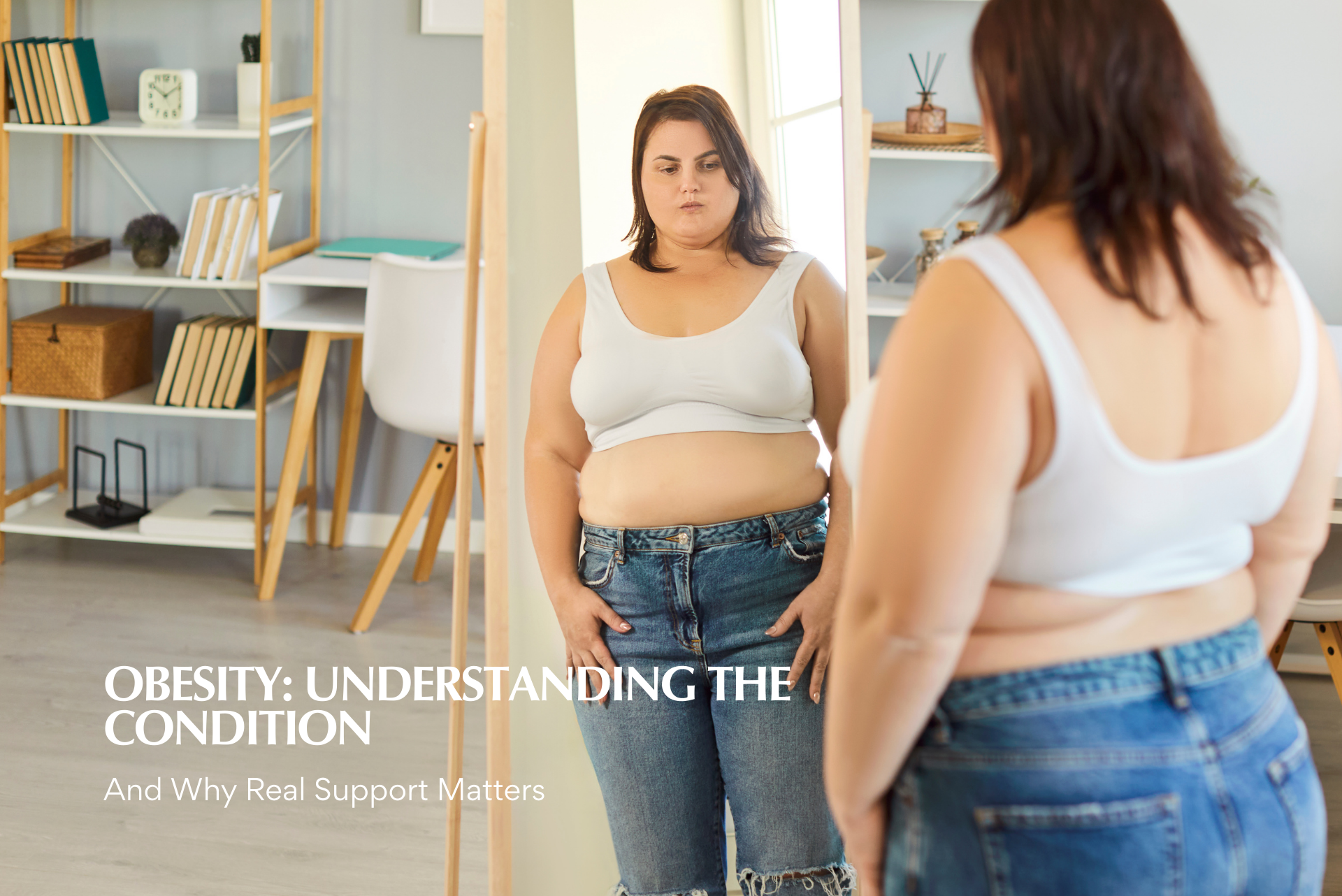
Obesity: Understanding the Condition - And Why Real Support Matters
More than 1 billion people worldwide are currently living with obesity. By 2035, that number is projected to affect nearly half of the global population.
Obesity is not rare.
It is not a lack of discipline.
And it is not a personal failure.
Obesity is recognised as a complex, chronic, relapsing medical condition. Understanding this is the first step toward meaningful, long-term change.
At Aurora Bariatrics & Metabolic Medicine, we believe education reduces shame - and informed care improves outcomes.
What Is Obesity? A Chronic Medical Condition
Obesity is influenced by far more than food choices alone.
It involves:
- Hormonal regulation
- Genetics
- Insulin sensitivity
- Appetite and satiety signals
- Sleep quality
- Stress levels
- Environmental factors
- Access to healthcare
Like other chronic conditions, such as diabetes or hypertension, obesity often requires structured, long-term management rather than short-term intervention.
If dieting alone were enough, long-term success rates would be higher. For many people, they are not.
Why Weight Loss Can Feel Increasingly Difficult
Many people describe a similar experience:
“I’m doing what used to work…but my body doesn’t respond anymore.”
There are physiological reasons for this.
Repeated dieting and weight cycling can lead to:
- Metabolic adaptation - the body burns fewer calories to conserve energy
- Increased hunger hormones
- Reduced fullness signals
- Loss of muscle mass, which lowers metabolic rate
- Greater risk of weight regain
Hormonal changes - particularly during perimenopause and menopause - can further affect fat distribution, blood sugar regulation, and muscle preservation.
They are not a character flaw. These changes are biological.
Obesity Does Not Occur in Isolation
Obesity is shaped by systems as well as individuals.
Factors such as..
- Socioeconomic stress
- Food availability
- Workplace pressures
- Mental health
- Healthcare stigma
- Limited access to specialist treatment
..all influence long-term health outcomes.
Stigma in healthcare settings has been shown to reduce help-seeking behaviour and worsen health outcomes. Compassionate, evidence-based care improves them.
Evidence-Based Obesity Treatment Options
Effective obesity treatment in Australia now includes both medical and surgical pathways, often working together.
At Aurora Bariatrics & Metabolic Medicine, care is individualised based on health history, metabolic markers, and long-term goals.
1. Medical Weight Management
Medical metabolic care may include:
- Comprehensive metabolic assessment
- Hormonal and insulin resistance evaluation
- Evidence-based weight loss medications (when clinically appropriate)
- Structured monitoring and follow-up
Medical treatment can help regulate appetite, reduce food noise, and support blood sugar control.
For some patients, it is the primary pathway. For others, it is part of a broader plan.
2. Metabolic (Bariatric) Surgery
Metabolic surgery works differently from dieting.
It can influence:
- Hunger and satiety hormones
- Insulin sensitivity
- Visceral fat reduction
- Long-term metabolic regulation
For suitable candidates, bariatric surgery can provide durable metabolic change and improve obesity-related conditions such as type 2 diabetes, hypertension, and sleep apnoea.
Surgery is not for everyone. But for the right patient, at the right time, it can be life-changing.
3. Psychological Support
Obesity and weight loss are not purely physical processes.
Long-term outcomes improve when patients receive:
- Psychological support
- Behavioural tools
- Structured coping strategies
- Ongoing mental health monitoring
Because real change involves identity, habits, relationships, and mindset, not just numbers on a scale.
Why Long-Term, Coordinated Care Matters
Obesity is a chronic condition. Chronic conditions require ongoing support.
At Aurora Bariatrics & Metabolic Medicine, care is not fragmented. Our coordinated multidisciplinary team integrates:
- Medical expertise
- Surgical skill
- Psychological support
- Nutritional guidance
- Long-term follow-up
This structured approach improves safety, sustainability, and patient outcomes.
You Are Not Alone
If you have:
- Tried multiple diets
- Lost and regained weight
- Felt judged in healthcare settings
- Been told to “try harder”
- Avoided seeking help due to embarrassment
You are not alone.
More than 1 billion people are navigating this condition globally.
The difference between frustration and progress is not willpower.
It is access to appropriate, evidence-based care.
Real Change Starts With Understanding
Obesity is not about blame. It is about better understanding and better access to treatment.
When obesity is treated as a medical condition:
- Outcomes improve
- Stigma reduces
- People seek care earlier
- Long-term health improves
At Aurora Bariatrics & Metabolic Medicine, we believe patients deserve:
- Clarity
- Options
- Respect
- Structured support
If you are ready to understand your metabolism and explore medical or surgical treatment options in Australia, the first step is a conversation.